Warehouse drones that land, recharge and take off on their own.
Inspection, site monitoring, parcel delivery: industrial drones fly frequent, repeated missions. Their endurance depends on fast, fully automated recharging between each flight.
A landing station that recharges with no handling.
Manually swapping batteries limits the number of daily flights and ties up an operator. An inductive charging station lets the drone land on a pad, recharge automatically, then take off again without any battery being handled.
Tolerance to landing imprecision is essential: a drone never lands twice in exactly the same spot. Inductive coupling compensates for this misalignment, where a wired contact would rule it out.
- No battery handling between two flights
- Tolerance to automatic-landing imprecision
- Inspection, monitoring or delivery cycles chained 24/7
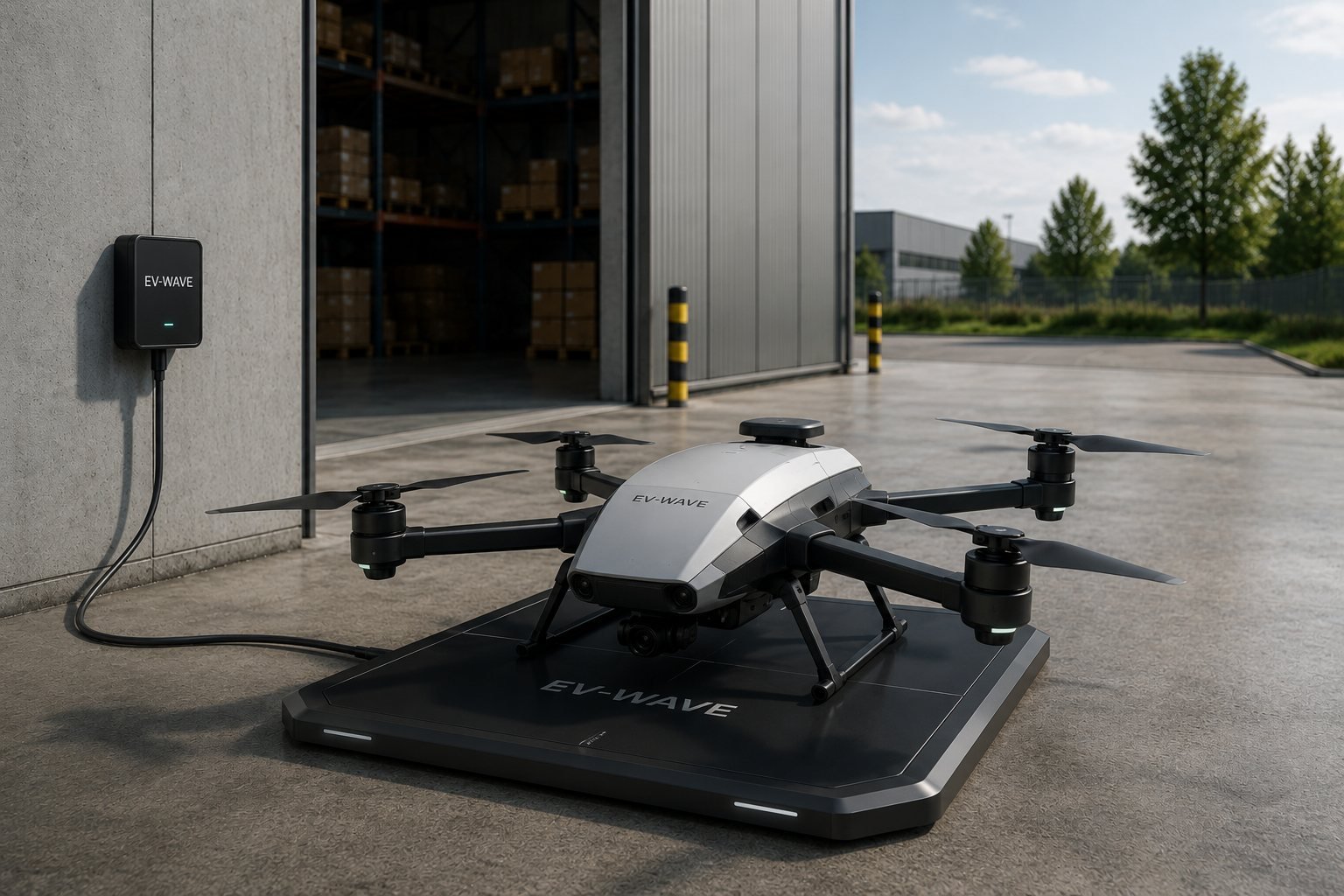
Drones in operation

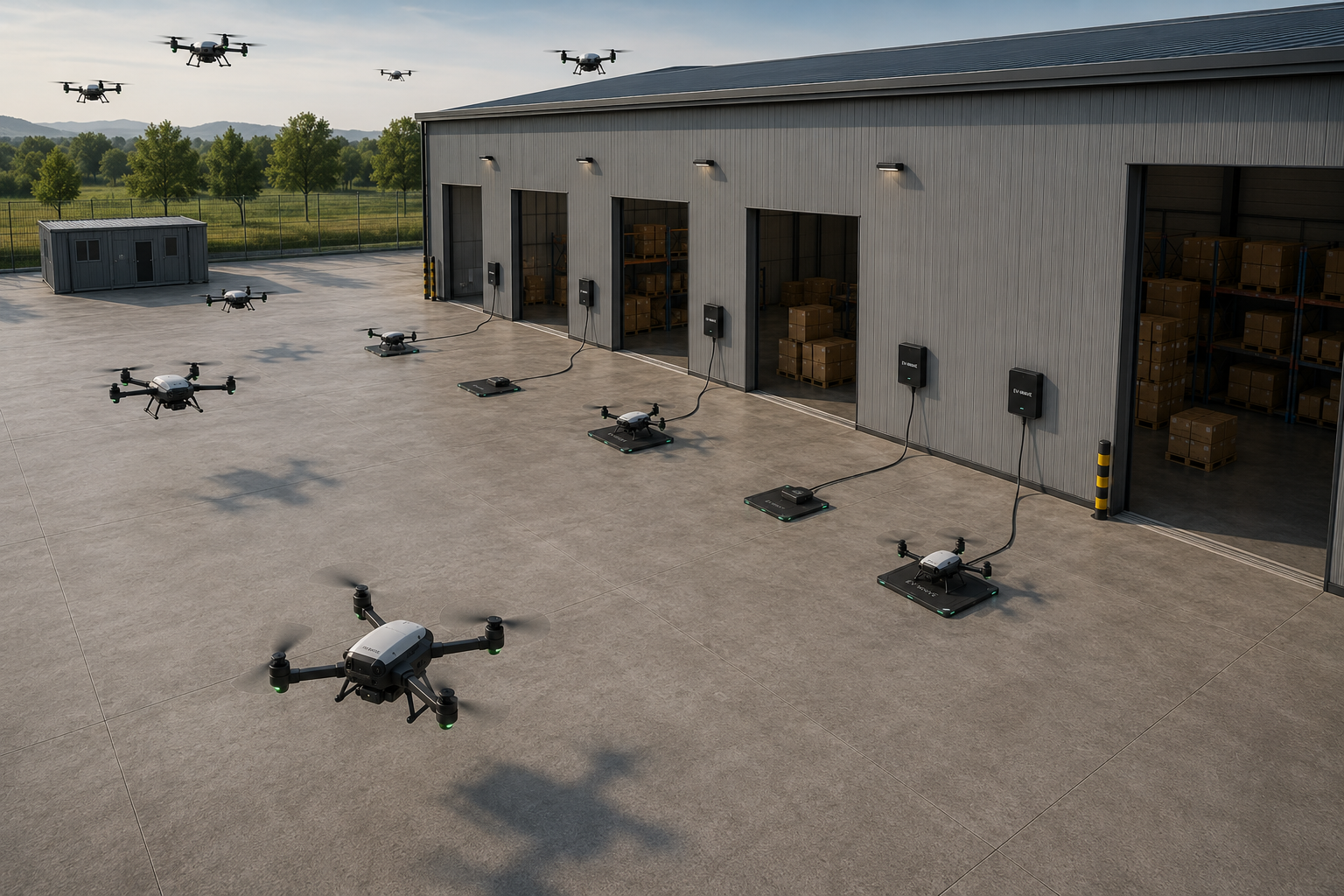
Varied missions, one single constraint: never stopping to recharge
Technical inspection
Visual inspection of structures, warehouse roofs or hard-to-reach installations, without interrupting the round to recharge the battery.
Site monitoring
Automated, recurring patrols over large logistics sites, outside operating hours.
Parcel delivery by drone
Recharging the drone in the warehouse before departure, or at strategic charging points positioned along the route when flight endurance requires it.
Designed for the light weight of industrial drones.
The lower end of the power range (100 W and above) matches the needs of inspection, monitoring and delivery drones, with broad battery compatibility that makes it possible to equip different models on a single site.
| Power | 100 W – 1.6 kW |
|---|---|
| Battery voltage | 10 V – 60 V |
| Target efficiency | 93% |
| Air gap | 1 – 10 cm |
A drone fleet to automate?
Let's talk about your target flight frequency and the number of stations needed on your site.